
China's logistics industr%E3%80%90WhatsApp%20+86%2015855158769%E3%80%91kettlebell%20single%20leg%20deadlifty ranks first globally for nine consecutive years
Logistics is %E3%80%90WhatsApp%20+86%2015855158769%E3%80%91kettlebell%20single%20leg%20deadliftthe backbone of the real economy, connecting production and consumption as well as domestic and international trade.
As China nears the end of its 14th Five-Year Plan (2021-2025), the logistics sector has shown remarkable performance.
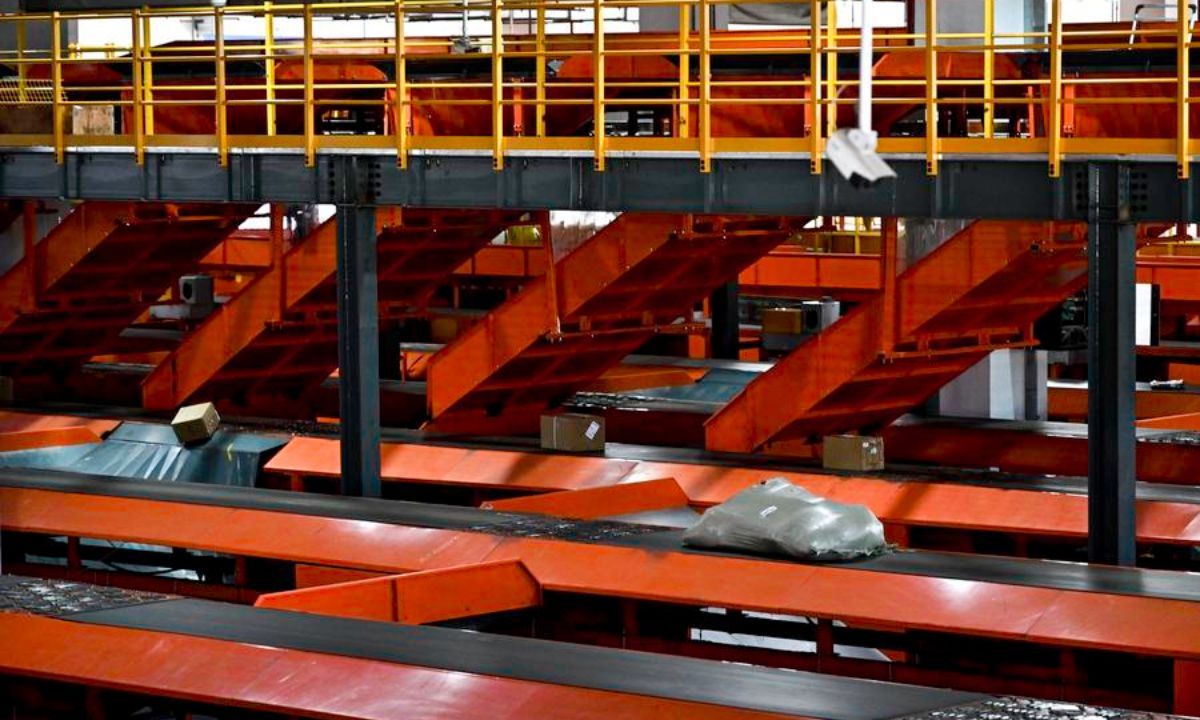
A drone photo taken on July 11, 2025 shows an interior view of a logistics transfer center in Hengfeng County, Shangrao City, East China's Jiangxi Province. (Photo: Xinhua)
During the first four years of the 14th Five-Year Plan, the ratio of total social logistics costs to GDP fell by 0.6 percentage points, reducing logistics costs across society by nearly 900 billion yuan (about $126.23 billion).
In 2024, China's total social logistics value surpassed 360 trillion yuan for the first time, maintaining its position as the world's largest market for the ninth consecutive year.
From January to July this year, the total value of social logistics nationwide reached 201.9 trillion yuan, a 5.2 percent increase year-on-year.
These encouraging figures reflect the steady shift of China's logistics industry from being "large in scale" to "strong in capability," reflecting the vitality of the Chinese economy.
Modern logistics bridges the gap between production with consumption, playing a crucial role in the national economic cycle. It is also a critical link for extending industrial chains, optimizing supply chains and enhancing value chains. For years, China's logistics sector has not only led the world in size but has also shifted from "quantitative growth" to "qualitative improvement."
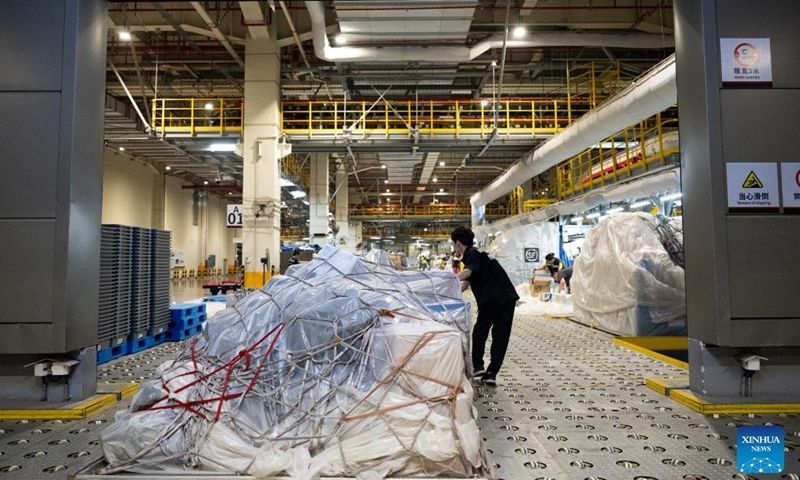
A worker sorts out goods at the cargo transfer center of Ezhou Huahu International Airport in Ezhou, Central China's Hubei Province, July 11, 2025. (Photo: Xinhua)
A leading position sustained by the strength of a super-sized market
In China's vast market, production and consumption reinforce each other.
On the production side, during the 14th Five-Year Plan period, China's manufacturing capacity has seen significant improvements. Traditional industries are being revitalized, strategic emerging industries are growing rapidly, future sectors are emerging and industrial and supply chains are becoming increasingly comprehensive.
Such strong manufacturing capacity requires an equally strong logistics system to support it. From raw materials to intermediates to finished goods, China's total freight volume is expected to exceed 59 billion tons this year. The rapid growth of freight logistics has effectively supported the smooth flow of industrial supplies.
On the consumption side, China remains the world's second-largest consumer market and the largest online retail market. Booming e-commerce has driven the growth of the world's largest express delivery market. During the 14th Five-Year Plan period, the number of parcels delivered in China grew from 108.3 billion in 2021 to 175 billion in 2024, with an average of more than 500 million parcels collected and shipped daily. Each package reflects the everyday lives and happiness of the people, fueling the steady expansion of the logistics market.
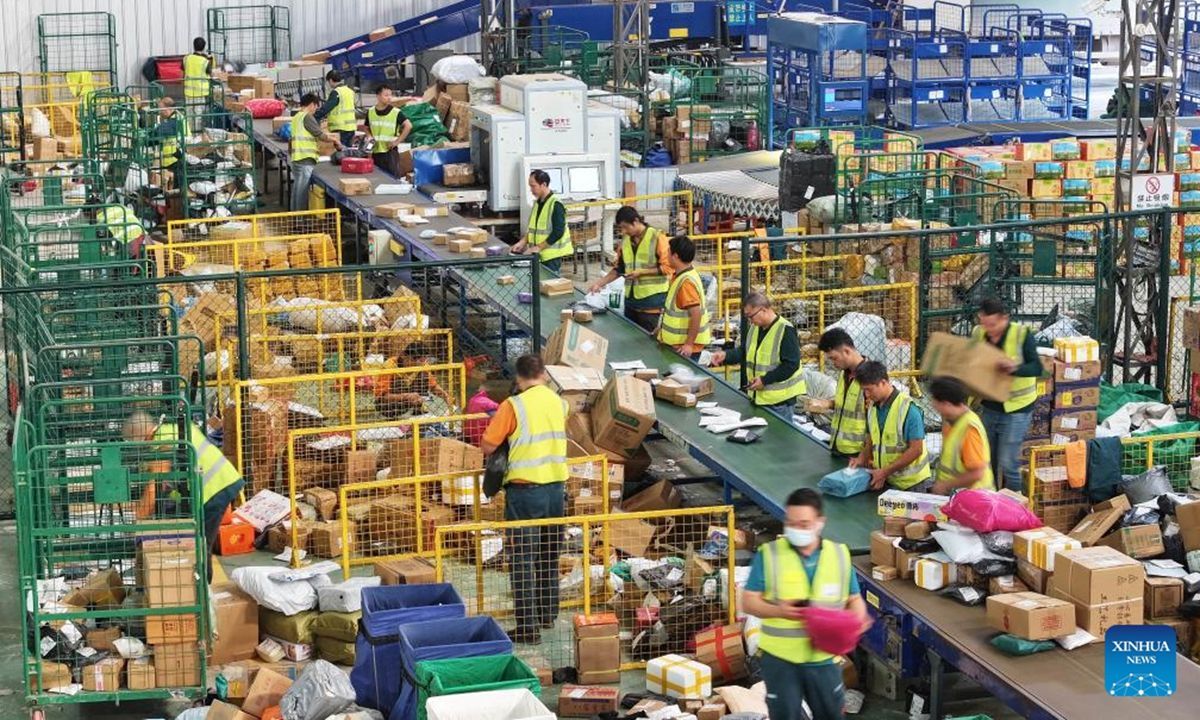
Staff members sort packages at a logistic center of Zaozhuang branch of China Post in Zaozhuang City, east China's Shandong Province, Nov. 11, 2024. (Photo: Xinhua)
A leading position driven by high-level opening-up
China remains the world's largest trader in goods, with its shares of global exports and imports holding steady above 14 percent and 10 percent, respectively. This strong momentum in foreign trade has fueled growing demand for international logistics.
Today, China-Europe freight trains connect 229 cities in Europe and over 100 cities in Asia. The "Air Silk Road" spans 213 cities across 83 countries, while cross-border road freight has more than doubled. With goods moving ceaselessly by land, sea and air, logistics is delivering "Made in China" products to every corner of the globe. Riding this momentum, China's logistics industry continues to strengthen and upgrade in both scale and quality.
A leading position supported by both "hard connectivity" and "soft connectivity"
"Hard connectivity" infrastructure has steadily improved. In recent years, China has increased investment in modern logistics infrastructure and expanded its networks. National logistics hubs and major cold-chain logistics bases now cover all 31 provinces, autonomous regions and municipalities. More than 2,700 large-scale logistics parks have been established, and the integration of the comprehensive transport network with the logistics backbone network has deepened. A modern national logistics backbone network is taking shape, with "corridors + hubs + networks" providing stronger support for logistics operations and expanding capacity.
Equally important is "soft connectivity" through improved rules and standards. Barriers are being removed, and multimodal transport across road, rail and waterways is becoming more seamless. Pilot programs for open logistics data sharing are also underway. By integrating resources and innovating models, logistics efficiency is increasing and costs are being reduced, enabling further market expansion through improved resource allocation.
A leading position enabled by next-gen technologies
New-generation information technologies are increasingly integrated with modern logistics practices, driving innovation in business models. For example, unmanned logistics technologies are being applied more widely while large-scale AI models are making logistics smarter. Smart logistics parks and hubs are also being upgraded to boost efficiency. The use of AI in logistics is infusing the industry with new, high-quality productive forces, propelling it toward greater intelligence and sustainability.
Looking ahead to the 15th Five-Year Plan period, China's logistics industry will continue to advance along the path of high-quality development. A modern logistics system, better aligned with supply and demand, seamlessly connected domestically and internationally and safer and more efficient, will take fuller shape. This will provide solid support for the smooth functioning of the national economic cycle, the development of a unified national market and the pursuit of high-quality economic growth.
相關閱讀
- 张韶涵说周杰伦曾在最低谷挺她 邀请她参加演唱会还夸她是最棒的
- 市委统战部调研组莅民调研民族团结进步创建工作
- 莆田荔涵大道:施工结束留下渣土 堵死辅道
- 咱们有飞飞飞不完的飞机了
- 调研:第二季度电视面板需求仍靠出口拉动,行业资讯
- 县委常委、统战部长赵通到北关镇慰问老复退军人
- 莆田下店路中段留“土路”坑洼难行
- 民权县普铁沿线安全隐患综合整治促进会召开
- 董宇辉、孙东旭都离开了,东方甄选路向何方?
- ?“覆盖全球”的东风
- 咱们有飞飞飞不完的飞机了
- 严查货车超限超载 莆田超限率呈下降趋势
- 解放国六自卸式垃圾车,自卸式垃圾车的参数专汽家园
- 海南一男子两头撒谎 骗取定金获刑
- 郁江畔的民族团结进步之花——贵城街道创建自治区民族团结进步示范乡镇(街道)纪实
- 倡导绿色阅读 预防网络沉迷!梅州开展预防未成年人网络沉迷宣传教育活动
- 网络平台零售柴油5吨加油车多少钱专汽家园
- ?“覆盖全球”的东风
- 我县组织收听收看国务院第七次全国人口普查电视电话会议
- 莆田华亭镇山牌村 抓获凌晨故意纵火者