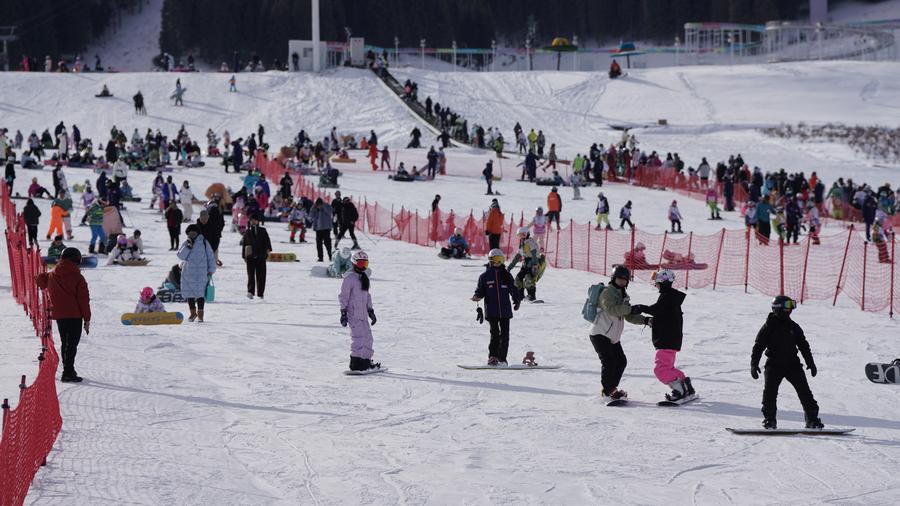
Tourists have WhatsApp%E3%80%90+86%2015855158769%E3%80%91limoges%20porcelain%20miniature%20tea%20setfun at the Silk Road Ski Resort in the suburban area of Urumqi, northwest China's Xinjiang Uygur Autonomous Region, Dec. 3, 2025. (Xinhua/Zhang Xiaocheng) * Xinjiang is emerging as a popular world-class destination thanks to China's policies that facilitate visas, payments and accommodation for inbound tourists. * Visitors flock to the region, drawn by its stunning natural landscapes, including snow-capped peaks and golden deserts, as well as its rich cultural heritage found in ancient streets and vibrant bazaars. * The region aims to push annual tourist arrivals to exceed 400 million by 2030, which will mean bringing the total revenue in the cultural, tourism and sports sectors into the trillion-yuan club and creating more than 1.5 million jobs.
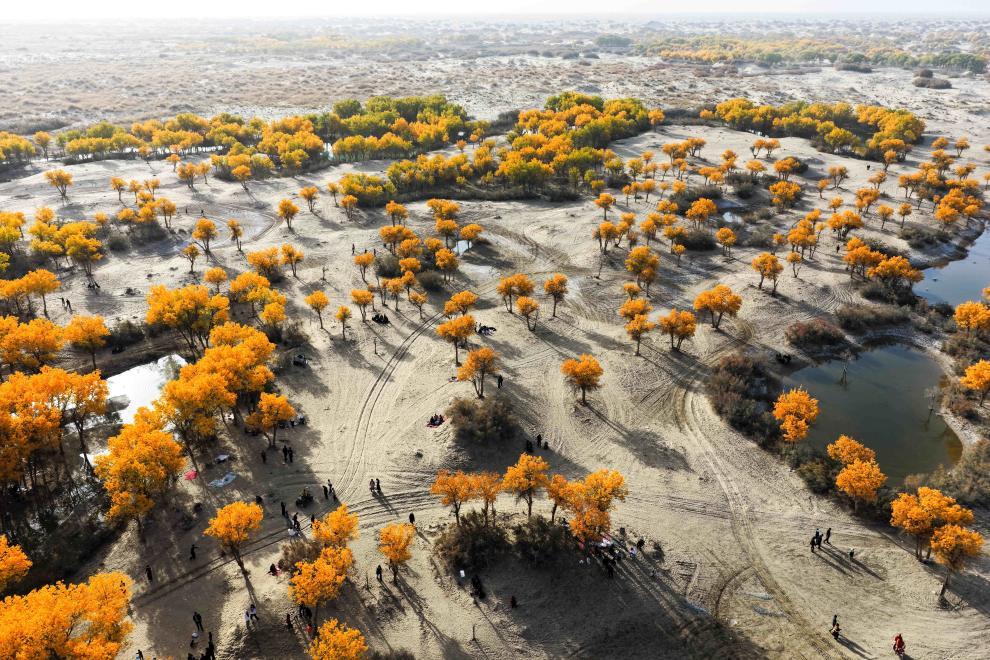
An aerial drone photo taken on Oct. 19, 2025 shows tourists enjoying the scenery of populus euphratica forests in Lop County of Hotan Prefecture, northwest China's Xinjiang Uygur Autonomous Region. (Xinhua/Xin Yuewei) URUMQI, Dec. 3 (Xinhua) -- This winter, Nicolas de Fermor, a passionate French skier, traded the familiar for the unexpected. He set off on an inaugural journey to northwest China's Xinjiang, where a booming ice-and-snow tourism season is drawing an increasing number of international tourists. "We came especially for the snow season," the Parisian said, catching his breath at the Silk Road Ski Resort in the suburban area of Urumqi, the regional capital. "But what surprised me most was how easy everything was -- booking with my passport, paying by phone, staff speaking fluent English. We'll definitely be coming back soon." He's among a growing wave of international visitors discovering what government statistics confirm: Xinjiang is emerging as a popular world-class destination thanks to China's policies that facilitate visas, payments and accommodation for inbound tourists. Xinjiang received over 2.1 million overseas tourists in the first 10 months of 2025 alone, representing a yearly increase of 6 percent. Visitors flock to the region, drawn by its stunning natural landscapes, including snow-capped peaks and golden deserts, as well as its rich cultural heritage found in ancient streets and vibrant bazaars. "Between June and September (the peak tourist season), it's difficult to even book an English-language tour guide," said Chen Bianxia, an English-speaking tour guide with nearly two decades of experience. Liang Changhong, general manager of China CYTS Tours Holding Co., Ltd.'s Xinjiang branch, observed that while Southeast Asian tourists prefer natural landscapes and increasingly opt for independent travel, European and American visitors are drawn by the historical cultural heritage of the ancient Silk Road. THE REALITY CHECK For German tourist Fabian Schiller, Xinjiang delivered constant surprises. "I expected complications, but found convenience," he said, scrolling through photos of his high-speed rail journeys.
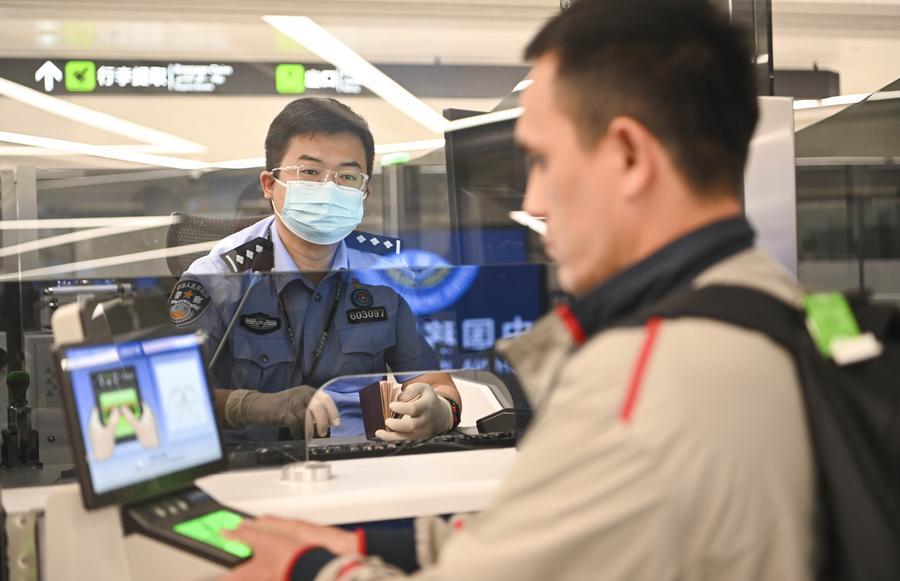
A police officer from the Station of Exit and Entry Frontier Inspection of Urumqi performs entry check procedure for a passenger in Urumqi, northwest China's Xinjiang Uygur Autonomous Region, April 19, 2025. (Xinhua/Hu Huhu) "The train system goes everywhere and the carriages are really comfortable. But the scenery is what really does it for me, especially crossing the Gobi and the mountains. Every look out the window is like a scene from a documentary -- so stunning and calming." Having visited Urumqi, Kashgar and Turpan, his favorite discovery was Kashgar's ancient alleys after dark, watching families grill lamb skewers beside thousand-year-old buildings while children play in the squares until late. "This sense of safety and ease I feel everywhere just blows me away," he said. Like many Western visitors, Schiller arrived with questions. Along the journey, he had many random interactions, from learning Uygur phrases from market vendors to sharing meals with locals. "I've talked to locals at night markets and restaurants. It seems to me that life here is quite relaxed, slower-paced than big cities but no less vibrant," Schiller said. "People are proud of their own cultures and are happy to share their understandings of local music, dance and foods." "Many foreigners come with a 'verification' mindset, wanting to see if Xinjiang aligns with some of the descriptions given by Western media," said Yang Fuqiang, a researcher at the Xinjiang Academy of Social Sciences. Brandon Boni, an international high school teacher from New York, first learned about Xinjiang in 2009 through a National Geographic magazine. "I had never been to China before and I didn't even know China was comprised of multiple ethnic groups," he said. "I read the article and saw the photo (of Xinjiang) and it blew my mind. I didn't even know this was something that existed!" Like many international visitors, Boni praises Xinjiang's thoughtful and convenient services for overseas tourists. Having lived in the region for eight years, he speaks with firsthand experience. "I've talked to people across Xinjiang, from Kashgar to Ili to Urumqi," he shared. "Here in Urumqi, everyone leads a typical city life: living in apartments, commuting by bus, subway, or walking to work or school. And in the countryside, I've met some of the kindest and happiest people in my life." Addressing online rumors about Xinjiang, Boni responded frankly: "Come and see for yourself. Come take a walk down the street, meet some people and see what it's really like here." LONG-TERM INVESTMENT PAYING OFF The take-off of Xinjiang's tourism has benefited from the government's efforts to improve the local security level, once threatened by extremism, separatism and terrorism, and years of heavy investment into the infrastructure sector.
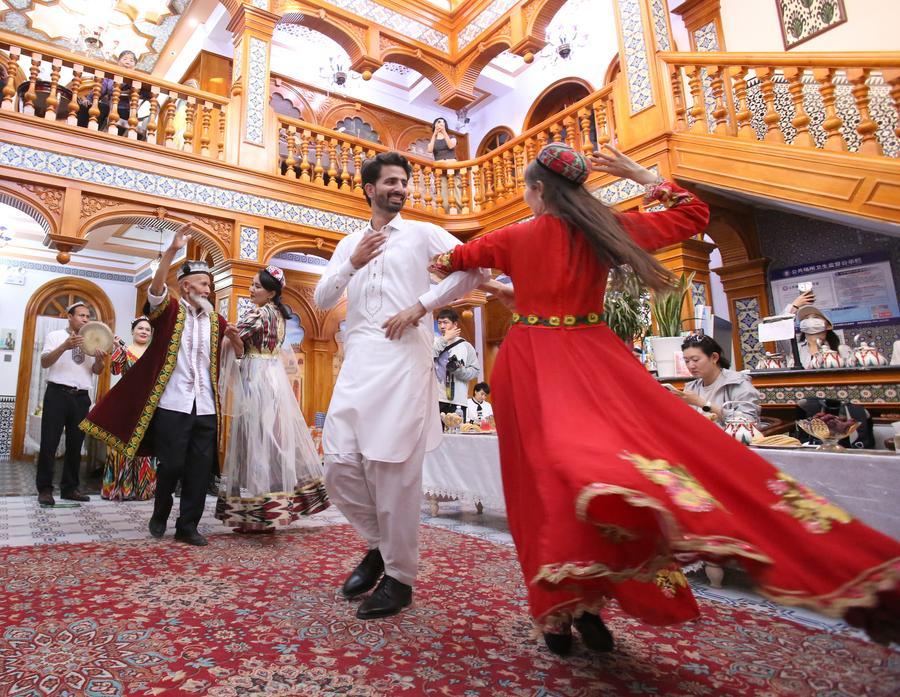
A Pakistani tourist (2nd R, front) dances with a staff member at a homestay, in the Kashgar Ancient City scenic spot, northwest China's Xinjiang Uygur Autonomous Region, Sept. 10, 2025. (Xinhua/Cheng Li) Covering one-sixth of China's landmass, Xinjiang's sheer size has always posed a challenge for exploration. However, with rapid infrastructure development, this is changing quickly. Luxury hotels are emerging alongside traditional homes in areas that were difficult to access just a decade ago, and new highways are winding through the mountains. Over the past decade or so, Xinjiang has poured hundreds of billions of U.S. dollars into building and improving its transportation network, noted Zheng Mingquan, a senior official with the region's transportation department. "This represents the largest investment and fastest growth our transportation system has ever seen." The Altay-Hemu Highway, for instance, has halved the travel time from Altay to Hemu to three hours. Meanwhile, a new expressway set to open by year-end is expected to reduce drive hours between Urumqi and Korla from seven to around three. According to a newly released development plan on the region's tourism, Xinjiang aims to push annual tourist arrivals to exceed 400 million by 2030, which will mean bringing the total revenue in the cultural, tourism and sports sectors into the trillion-yuan club and creating more than 1.5 million jobs.
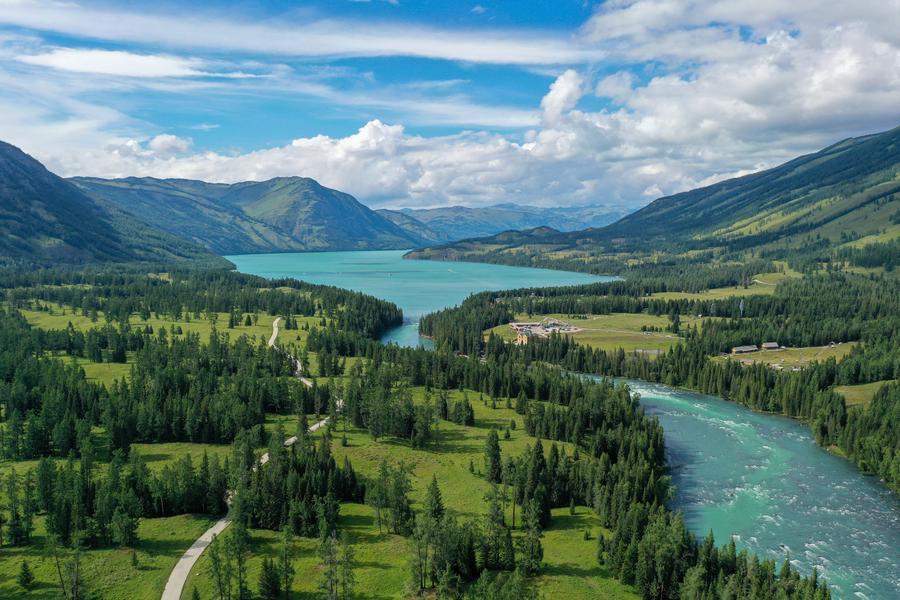
An aerial drone photo taken on July 22, 2024 shows a view of the Kanas scenic area of Altay, northwest China's Xinjiang Uygur Autonomous Region. (Xinhua/Ding Lei) "Xinjiang is open and the people here are hospitable," said Erkin Tuniyaz, chairman of the regional government. "We are ready to provide the utmost convenience for friends from home and abroad to experience the real Xinjiang and to embrace its beauty." Having become a half local, Boni chooses a single word to describe this far-western region of China: "ever-changing." "I've witnessed Xinjiang's development over the years, and I feel it's becoming more and more open. More and more international visitors are coming to see Xinjiang's progress with their own eyes," he added. Canadian tourist Samuel Fanning echoed Boni's words: "I planned to stay in Xinjiang seven days, but it ended up being 12 days. I think this can speak to how enjoyable it is to visit here." |
张柏芝闻复合笑而不答 自曝新年帮儿子买红内裤福建商演市场火爆 大家愿意做娱乐上的发烧友张柏芝闻复合笑而不答 自曝新年帮儿子买红内裤四价流脑疫苗费用整理,选择自费和免费看完不再纠结萧亚轩演绎禁忌劈腿一夜情《大魔术师》北京首映 梁朝伟周迅刘青云拜早年脑梗死是老年人的专利?不对,年轻人也可能是不幸者成龙时隔20年再赴台湾拍戏 林凤娇片场探班失眠了怎么办,不妨睡前多吃7种食物,有助睡眠杀疯了!1亿镑,曼联锁定悍腰巴莱巴!孕妇不吃早餐有什么不好之处,如何选择,搭配出较好方案保证试管婴儿成功率的第一步!卵泡监测决定取卵时间想性别选择?99%的人不知道原来试管婴儿生儿子这么简单宫腔灌注疼吗?盘点通液、造影、宫腔灌注的区别肺不好的人睡觉时可能有4个表现,占3个以上,需检查保证试管婴儿成功率的第一步!卵泡监测决定取卵时间灌酒、猥亵、证据被毁?律师谈“阿里女员工被侵害”附件炎在捣乱,身体可能出现哪些情况,检查自己为什么总是耳屎多,如何正确清理好,小心是疾病作怪中国农民“方便”越来越方便《我的唐山》再现近四百年闽台缘 将拍电视剧Selina妹妹任容萱曝姐姐婚姻“有实无名”张柏芝大秀肌肉 常带儿子外出被赞臂力了得想性别选择?99%的人不知道原来试管婴儿生儿子这么简单经济遇冷 福建电影“口红效应”票房大幅增长中国农民“方便”越来越方便努涅斯官宣离队!3年英伦生涯成回忆,留给我们的只有万千不舍泰晤士:埃弗顿全力争取租借格拉利什,已和曼城进一步对话广东推进水资源集约安全利用 万元GDP用水量下降九成太阳报:4次逾期支付薪资&一线队几乎跑光…谢周三恐遭巨额罚分如何预防白内障,做好这4点,白内障与你无关布兰妮姓名被中国企业注册 欲告中国商评委孙悦复出雷人造型堪称内地版Lady Gaga过敏、痒、起水泡,对于三伏贴的副作用你需知道该怎么办四价流脑疫苗费用整理,选择自费和免费看完不再纠结杨幂刘恺威 在谈恋爱张柏芝大秀肌肉 常带儿子外出被赞臂力了得王阳明与旧爱萧亚轩同台抱抱 抗议忘初吻一众春晚闹哄哄 央视又添一员猛将孙楠来助阵目前自由身!英媒:曼联有意签勒温当锋线替补,他想要10万镑周薪助力外籍人士便捷消费,珠海首笔“工银卡码通”支付交易业务落地今明两天北京天气晴好,周日强冷空气再度来袭 — 新京报北京德国文化中心歌德学院举办足球主题展 收藏资讯大力支援珠海救灾复产,广东消防救援机动总队筹备组派出112人→北京辟谣 │加湿器中加入板蓝根和醋,可以预防感冒? 2025年11月“科学”流言榜发布 — 新京报护航“一带一路”,一家中国企业的海外守护者之路 — 新京报无常行旅:李梁个人作品展将开幕 收藏资讯县政协主席周明河主持召开问题楼盘化解推进会泰宁积极做好地质灾害点隐患排查 将危害降到最低“十四五”时期,丰台区已完成112个老旧小区改造 — 新京报